
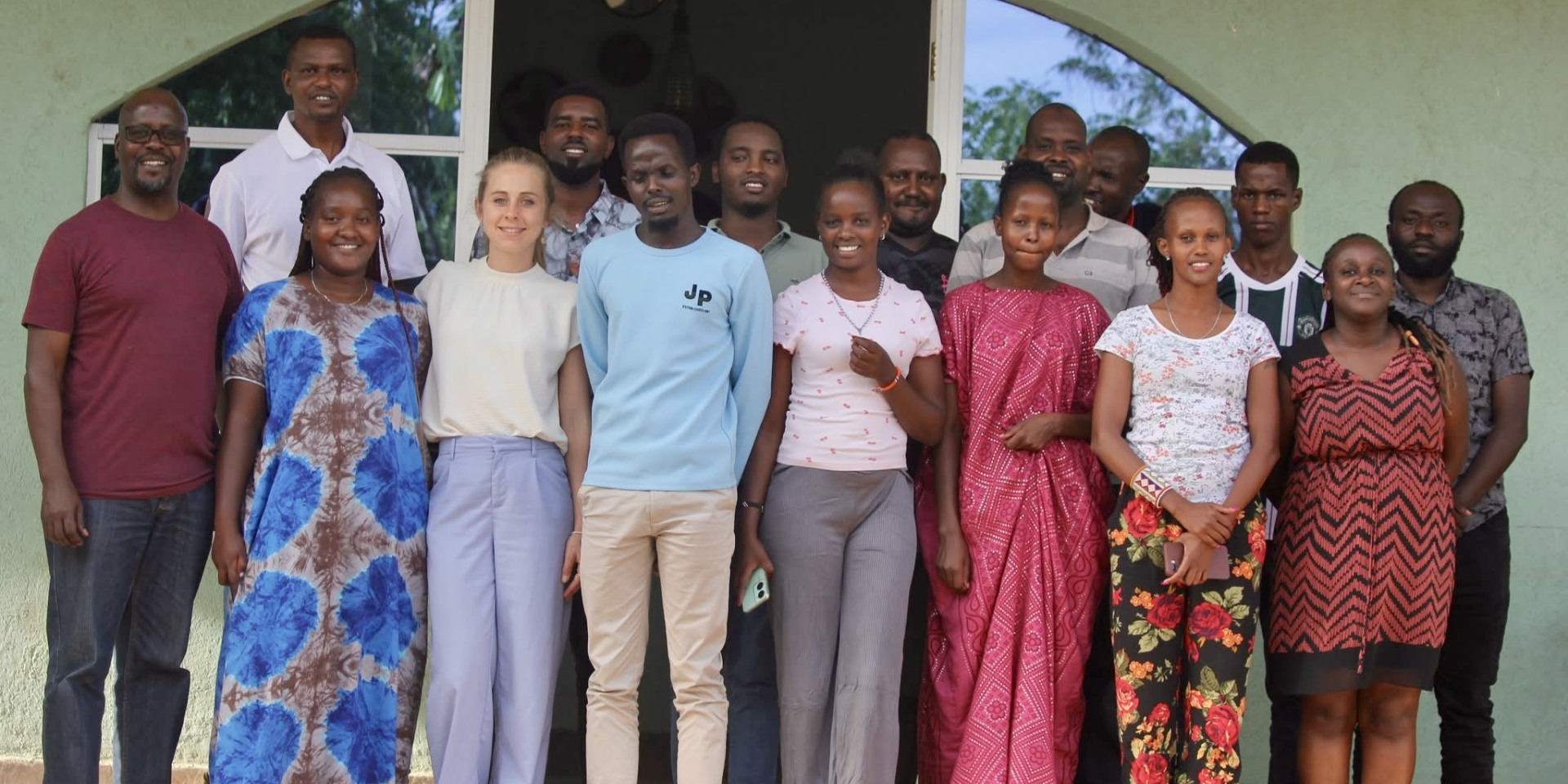
Photo: Charlotte with the team of the Samburu Women Trust
Supporting the teams by developing strategies to enhance resource mobilisation and donor communication, building capacity, sharing knowledge, writing proposals, and establishing sustainable fundraising structures and practices.
Charlotte has an academic background in international development and several years of work experience in project and grants management and donor compliance advisory in the humanitarian and development sector. Being a feminist at heart, she brings a specific focus on gender justice in programming, and a hands-on and solution-oriented way of working, always keen to learn with and from others to achieve greater impact jointly through diverse forms of collaborations.
This advisory deployment strengthens resource mobilisation and communication capacities of two horizont3000 partner organisations in Kenya: Samburu Women Trust and Azadi Kenya. It responds to a funding landscape that shifts towards decentralised donor decision-making and growing expectations for direct engagement, while many local organisations still rely on short-term, project-based grants and lack robust systems for fundraising, visibility and stakeholder relations. The assignment applies a gender lens, aiming to underpin sustainable operations that enable long-term work on women’s and girls’ rights and survivor-led protection.The Advisor reviews existing fundraising practices, maps gaps and opportunities, and supports the development of tailored resource mobilisation strategies with practical manuals on donor communication. It advises on processes and organisational structures for professional fundraising and partnership management, including clearer internal routines for planning, tracking and learning from outreach. The role supports proposal development, explores alternative fundraising modalities such as foundations and social enterprise approaches, and strengthens knowledge management so evidence and messages are packaged consistently for external stakeholders.By strengthening tools, skills and coordination, the deployment helps both organisations diversify funding sources, expand partnerships and improve visibility in ways that match their distinct contexts: indigenous women’s leadership and collective advocacy in pastoralist areas, and survivor-centred recovery and reintegration support in urban and peri-urban settings. Ongoing monitoring of resource mobilisation measures enables strategic recommendations that improve sustainability and reduce dependence on single donors.
Azadi is a survivor-led organisation that focuses on the provision of long-term support for survivors of trafficking who, too often, find a lack of community support when reintegrating into society following their experience of trafficking. All our programmes are meant to facilitate healing, reintegration, and survivor leadership.
SWT is an indigenous women-led network advancing women and girls rights among indigenous communities, for decade we have been on frontline advocating inclusiveness and effective participation of indigenous women and girls in decision making processes. The organization strengthens the capacity of women and girls to influence policies, increase voices and leadership.
