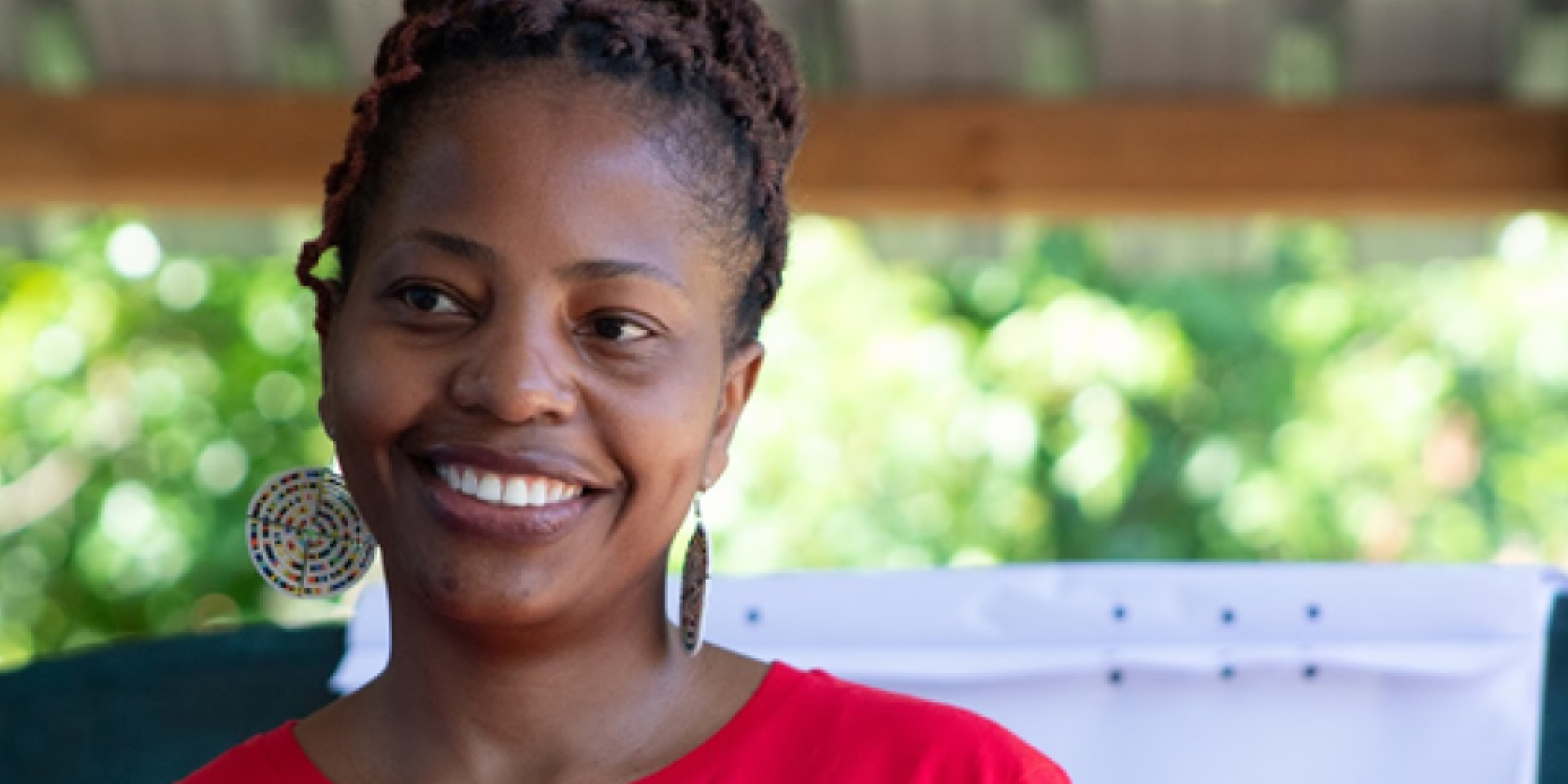
What can others actually learn from a project experience? Drawing on the questionnaires submitted during the horizont3000 Knowlympics knowledge-sharing games, this interview with our gender expert Maureen Obbayi, examines how organisations can move beyond generic conclusions and capture concrete processes, challenges and adaptations from a gender perspective.
Diego Freudenthaler (horizont3000): What was great about the questionnaires that have been submitted? What are positive aspects that others can learn from?
Maureen Obbayi (horizont3000): It is commendable that most submissions demonstrated a clear intent and drive for transformative change. Crucially, many partners recognized gender analysis as the indispensable starting point-ensuring that their intervention directly tackled the core gaps identified.
From a gender perspective, what details are needed to understand whether an activity contributed to meaningful change rather than simply including gender-related topics?
Genuine social transformation takes time, consistency, and ongoing effort. To share a good practice effectively, we need to guide others through the actual step-by-step process. That means answering the most basic and practical questions:
True transformation rarely happens without friction and pushback, so we’d want to catch a little glimpse of the resistance points. Where possible, showing how this intervention shifted day-to-day behaviour and practices would be ideal. Above all, we want to walk away with absolute clarity on three things: what to keep doing, what to stop doing, and what to do differently next time.
The hardest part is almost always in the day-to-day execution, and sharing these critical steps provides a roadmap that allows others to learn, adapt, and replicate our success.
How can organisations document changes in gender roles or behaviour more concretely, especially when evidence comes from observations, interviews or participants’ own accounts? For example, when organisations report that attitudes or behaviours changed, what examples or evidence would make such claims actually credible and useful?
At this early stage of our programming, the biggest transformations are happening at home. Even before undertaking the formal and more complex evaluation studies, we simply need to look and listen closely. Personal stories offer rich evidence of change, verified by the community around them, for instance, when a neighbour notices a husband stepping in with childcare. Then there’s what can be observed at project level: a woman speaks up confidently in a meeting; partners start attending sessions together.
But presence alone is not the whole story. Facilitators must look beyond mere attendance to read the room: is a spouse's presence warmly supportive (letting the other speak, smiling, nodding…) or quietly controlling? Finally, there’s the tangible proof on the farm: livestock, tools, or land that women actually control, and other improvements in quality of life. These everyday observations weave together a credible picture of lasting change.
"Facilitators must look beyond mere attendance"
To capture these shifts, organizations must stay intentional, and not be buried in the day-to-day implementation. They must schedule regular, dedicated time in the project calendar to listen, reflect, and document qualitative progress, looking beyond just the numbers. Crucially, field staff must be trained to develop sharp observational, sensitivity (to change) and inquiry skills, so they know what to ask, whom to ask, and when, always prioritizing participant safety to prevent unintended harm. horizont3000 is proactively strengthening partner capacity in impact storytelling- equipping them to ask the right questions, actively listen, gather reliable evidence, and document outcomes effectively. We intend to keep this momentum going.
How can organisations move beyond generic conclusions, such as “participation is important”, and formulate lessons that another organisation could actually use?
To understand real-life change and draw meaningful conclusions, we must break down abstract concepts like participation or empowerment into practical, observable daily behaviors, for exmaple:
Once these relatable basics are defined, how we ask the questions becomes just as important. Drawing on the storytelling approach by Samuel Hall (recent training for East African partner organisations - partner and member organisations can log in to see training material on the Knowledge Hub), uncovering authentic realities means holding simple, open-ended conversations in informal, familiar spaces. Simple, grounded questions asked during everyday routines invite honest reflection.
Beyond what is explicitly spoken, deep active listening – attuned to subtle shifts in tone, non-verbal cues, and what goes unsaid – uncovers the authentic truth of people's lives. Capturing these insights on the lived realities and unspoken barriers that communities face should then lead us to visualize the larger impacts, and ultimately inform how we work more effectively.
To translate learning into actionable practice, every lesson learned should thus showcase:
We often celebrate the final milestones, but quietly erase the process that led to the success.
What kinds of reflections would you like to see more of in future questionnaires?
I’d love to see more submissions that highlight what did not work. We need to celebrate honest reflection and embrace vulnerability, or else we risk repeating the same mistakes. Sharing our failures is often where our greatest learning happens: it is how we design stronger, more effective interventions. Embracing this transparency further reflects the reality of community work – plans don't always translate seamlessly to the ground! By normalizing this truth, we can stay flexible and continuously pivot towards what truly serves our communities.
Among our partners, there is a wealth of untapped knowledge around navigating the more formal engagements, whether advocating for a particular policy, or budget process, or driving legal reform. Organizations rarely document these processes step-by-step, likely because they are long, unpredictable, and far from linear.
We often celebrate the final milestones, but quietly erase the process that led to the success. Taking the time to reflect and capture the unwritten rules, failed entry points, dead-ends and strategic pivots becomes our most valuable lesson, creating the missing roadmap for anyone attempting to operate in these complex and dynamic spaces.