Date
02.10.2026

Changing Norms Through Alliances for Women’s Access to Land

Topic: Human Rights & Civil Society
Human Rights & Civ. Soc.
Gender Equality
Sustainable Livelihoods
Senegal
Learn&Share: knowhow3000

Problem & Solution

In Dabaly, a women’s group sought access to a specific plot of land for market gardening. Although the land was affected by salinisation, it offered an opportunity for the women to generate income and strengthen household food security. Local pastoralists opposed the allocation because they wanted the same area included in a livestock grazing zone and the village chief rejected the request.

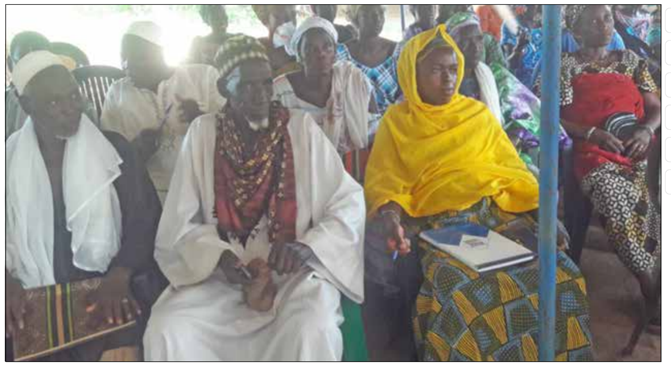
Symbiose helped the women to prepare a collective claim, understand the formal allocation process and negotiate with the authorities and other community actors. By combining informed advocacy, mediation and alliances with supportive elected representatives, customary and religious leaders and local men, the group eventually secured formal and socially recognised access to the land.

The Experience

  • A participatory diagnosis identified insecure access to land as the main barrier to women’s income-generating activities. It also examined environmental pressure, power relations and resistance.
  • Symbiose trained women, community leaders and elected officials on land procedures, governance, communication and negotiation. The women prepared meetings collectively, verified information and refined their messages.
  • After the village chief initially refused their request, the women maintained dialogue, used regulatory and technical arguments and mobilised supportive local actors rather than treating the dispute as a single confrontation.
  • Elected representatives, customary and religious leaders and male allies supported mediation. The competent commission verified the site, after which the municipal council formally allocated land to the group.
  • Intimidation continued after approval. A core group of women, backed by allied men, developed the site, while religious reassurance and community engagement helped reduce opposition.
  • The women began agroecological market gardening on salinity-affected land. Municipal procedures supported collective management and ownership.
01

Challenges

01

  • Women faced discriminatory norms, limited knowledge of land procedures and little influence over land decisions.
  • Initial refusal, intimidation and continuing resistance even after formal approval.
  • Competing claims from pastoralists amid scarce productive land and salinisation.
  • Need to balance legal rights, customary practices, religious influence and community cohesion without escalating conflict.
02

Impact

02

  • Secure access to productive land and the start of women-led market gardening and more sustainable use of salinity-affected land.
  • Increased income opportunities and more diversified livelihoods of households.
  • Greater confidence, leadership and participation of women in economic and land-related decisions.
  • Improved recognition of women’s economic role and reduced resistance among families and local authorities.
03

Lessons Learned

03

  • Train women to verify information, map decision-makers and prepare negotiation messages collectively.
  • Analyse power relations and resistance before submitting a land request, then engage influential allies early.
  • Combine municipal procedures with repeated community mediation; approval alone does not ensure social acceptance.
  • Involve supportive men and women in decision-making bodies as active advocates, not merely participants.
  • The commitment of men as allies (heads of households, religious leaders, elected officials) has been decisive in changing discriminatory social norms.
Realisation period 2015–2017
Location Nioro du Rip, Senegal
Contact Malick BA

Partner organisation - Symbiose Sénégal

Symbiose supports and assists grassroots communities in achieving sustainable development. Its staff has a wealth of experience and is made up of sociologists, educational mediators, community organisers, agronomy technicians and finance technicians.

Your choice regarding cookies

This website required cookies in order to function. Technically required cookies stored locally do not collect any personal data. Further technically required cookies are stored by the providers of third party applications.
Additionally, non-essential cookies are collected for analytical purpuses.

You can find out more by visiting our cookie policy linked below.