Engaging Male Informal Justice Actors to Advance Women's Land Rights

Topic: Human Rights & Civil Society
Human Rights & Civ. Soc.
Gender Equality
East Africa
Learn&Share: knowhow3000

Problem & Solution

In northern Uganda, patriarchal norms and discriminatory customary practices placed land ownership and inheritance largely under male control, leaving many women as users rather than recognised owners. Women were often excluded from household and community decisions, while stigma and fear of reprisal discouraged them from reporting violations. Communities relied on accessible informal justice actors to settle disputes, but these predominantly male structures had limited knowledge of women’s rights, and gender-responsive justice methods.

UWONET responded by strengthening these community-based justice mechanisms to deliver gender-responsive resolution of land disputes, instead of creating a parallel system, resulting in improved women’s access to justice and their ability to claim and protect their rights.

The Experience

  1. A baseline and gender analysis identified barriers to women’s land ownership and access to justice. It also confirmed that communities preferred informal justice actors because they were physically accessible, affordable and expedient.
  2. UWONET engaged legal practitioners and gender experts to train women farmers on land rights, legal frameworks and referral pathways. Informal justice actors learned gender-responsive case resolution, case management and when to refer complex cases.
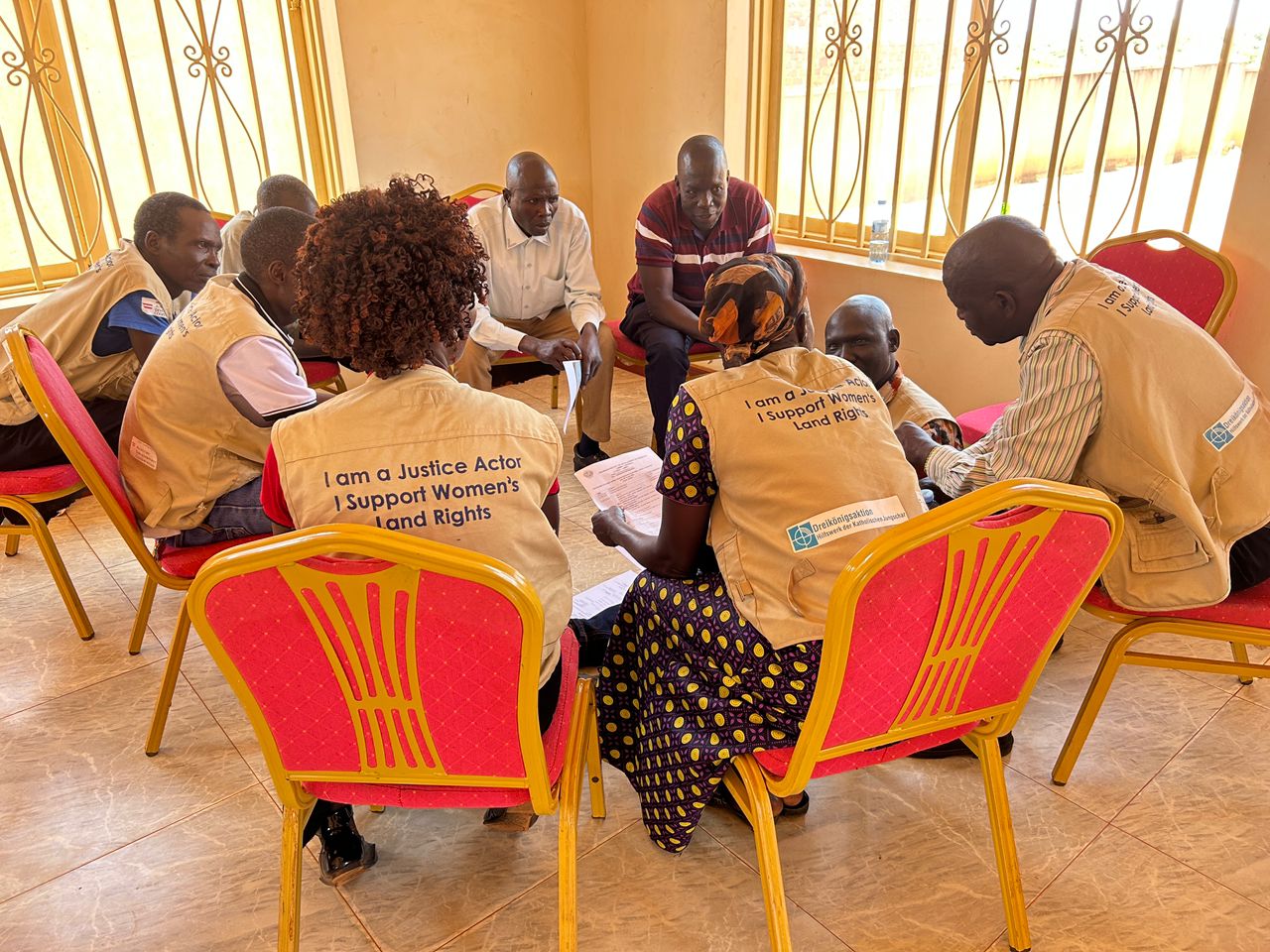
  3. The actors received tailored case-management books to document, track and refer disputes. Jackets branded with the message “I am a justice actor – I support Women’s Land Rights” increased their recognition and publicly signalled their commitment.
  4. Informal justice actors then led community dialogues using discussions, art and drama to explain women’s rights, challenge discriminatory norms and clarify the roles of customary and formal justice systems.
  5. They mediated disputes locally, while police, prosecutors and magistrates advised or handled cases outside their mandate. Annual reviews, monitoring visits and peer exchange reinforced accountability, enabled reflection on difficult cases and improved mediation practice.
01

Challenges

01

  • Intimidation and threats when mediation outcomes did not favour disputing parties.
  • Resistance to women mediators, requiring team-based case handling and stronger public visibility.
  • Conflicting decisions between trained actors and untrained peers in neighbouring areas.
  • Difficulties in linking informal justice actors to formal institutions and establishing referral, follow-up and compliance monitoring for complex cases.
  • Emerging household backlash, with some men transferring financial responsibilities to women who had become economically stronger.
02

Impact

02

  • Greater confidence among women to report violations and seek community-based justice.
  • Fairer dispute resolution and growing support from male leaders for women’s inheritance and equitable land sharing.
  • Reclaimed land used for farming, improving food security, income and women’s control over productive resources.
  • Increased community trust in women serving as justice actors.
  • Fewer escalating disputes as awareness and acceptance of women’s land rights grew.
03

Lessons Learned

03

  • Retain trusted community-based structures, but define their mandate and train them in rights-based and gender-responsive case handling.
  • Provide simple case tools and require reporting to track referrals and compliance.
  • Community awareness sessions should accompany mediation services so disputes are reported early before escalation.
  • Regular review meetings, monitoring visits, and peer learning sessions enabled justice actors to share experiences, reinforce their knowledge, solve emerging challenges, and improve case handling. These actors were jointly engaged 5 times per year.
Realisation period 2023-2026
Location Nwoya, Uganda

Partner organisation - Uganda Women’s Network (UWONET)

Uganda Women’s Network (UWONET) is a women’s rights advocacy organisation coordinating collective action among women’s rights and gender equality stakeholders for the attainment of gender equality and equity in Uganda. UWONET is a network organisation with 25 member organisations and 9 individual members.

Your choice regarding cookies

This website required cookies in order to function. Technically required cookies stored locally do not collect any personal data. Further technically required cookies are stored by the providers of third party applications.
Additionally, non-essential cookies are collected for analytical purpuses.

You can find out more by visiting our cookie policy linked below.