Date
03.10.2026

“We Thought Maintenance Was Gender-Neutral”

Topic: Gender Equality
Gender Equality
East Africa
Advisory
Learn&Share: knowhow3000

Problem & Solution

Bushulo’s maintenance team initially judged quality mainly by whether equipment and infrastructure were safe, correctly installed and functional. Yet the all-male technical team was often using its own perspective as the default, while many daily users were women. This overlooked how installation height, reach, location, workflow, privacy, communication and repeated minor faults affected colleagues’ work.

The hospital responded by treating user experience and respectful interaction as part of technical quality. Its simple “Ask, Listen, Respect” approach combines technical expertise with user consultation before installations and attention to the practical consequences of faults.

The Experience

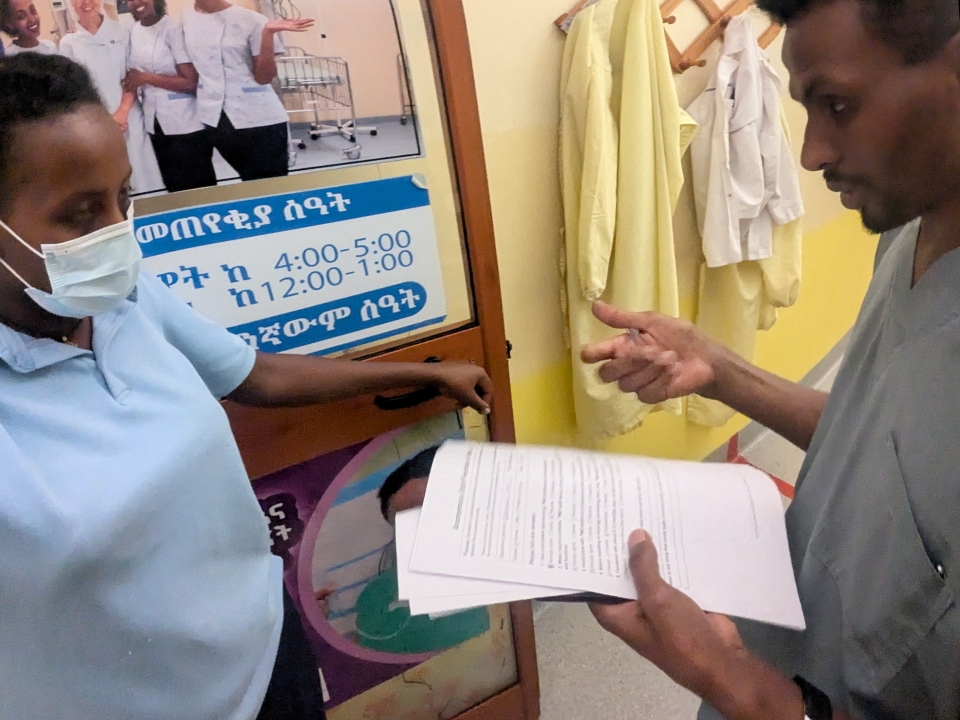
  • We noticed the blind spot. TMD originally approached most problems from the machine outward: Is it safe? Does it work? Can we fix it? Daily contact with clinical and support staff showed us that technically correct did not always mean user-friendly.
  • We started asking before drilling. When planning installations or modifications, we began paying more attention to the people who would actually use them and asking about practical issues such as height, reach, location and workflow. The manual tells us how to install it. The user tells us where it belongs
  • We started asking what “broken” means. Instead of stopping at the technical fault, technicians increasingly asked what the fault meant for the user's work. Something that looks like a minor inconvenience to a technician can become a major problem when a colleague has to deal with it repeatedly throughout a shift.
  • We talked about how we talk. An all-male workshop can develop its own humour and habits. We became more conscious that some forms of language or behaviour can make female colleagues uncomfortable. We therefore discussed the importance of avoiding sexualised jokes, comments about appearance, unnecessary familiarity, dismissive behaviour and unnecessary showing off of technical knowledge.
  • We kept it simple. No expensive methodology was needed. Three rules became our shorthand: Ask before you drill. Listen before you fix. Respect the person in front of you. The approach mainly requires attention, feedback and the willingness to change everyday habits.
01

Challenges

01

  • An all-male technical team whose own experience could become the unexamined reference point for users’ needs.
  • Limited consultation before installations, despite progress in listening during repairs.
  • Changing communication and workplace habits without blaming individuals or reducing the issue to a one-off campaign.
  • Turning informal learning into consistent practice, monitoring and accountability across the hospital.
02

Impact

02

  • Five of eleven technicians recognised that technically functional solutions may still be difficult for users.
  • Women’s feedback helped identify practical problems and gaps in user consultation.
  • Team discussions covered respectful communication and personal boundaries as part of service quality.
  • Shared “Ask, Listen, Respect” language, supported by checklists and awareness materials.
  • Validation also exposed continuing gaps in approaching the team and consultation before changes.
03

Lessons Learned

03

  • If someone reports the same “small” problem repeatedly, it probably is not small to them.
  • Involve users earlier and ask before you "drill", it can prevent years of inconvenience.
  • A technician who makes a colleague uncomfortable is not providing a good service. Do not confuse technical confidence with dominance. Listening is not a loss of authority.
  • You do not need a separate gender project before you can start listening better. Gender equality can enter routine technical work through everyday decisions.
  • Friendly is good. Overly familiar is not the same thing. Personal boundaries and tone matter.
Realisation period 2025-2026
Location Awassa, Äthiopien
Contact Sister Thi

Your choice regarding cookies

This website required cookies in order to function. Technically required cookies stored locally do not collect any personal data. Further technically required cookies are stored by the providers of third party applications.
Additionally, non-essential cookies are collected for analytical purpuses.

You can find out more by visiting our cookie policy linked below.