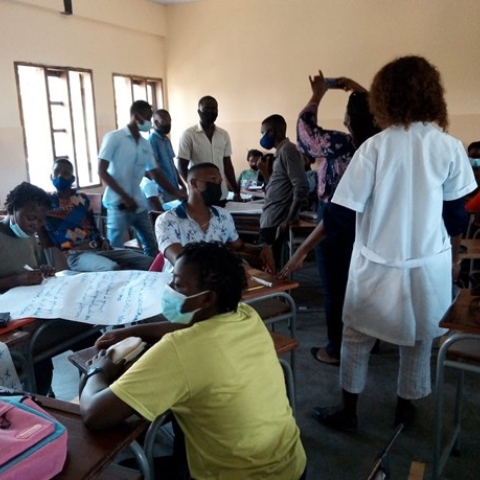
Up to 50 young graduates of vocational training courses have an income and are thus improving their living conditions.
Directly involved are 50 young people between the ages of 15 and 25 who are not in education, employment, or training (NEETs), of whom 60 % are young women and girls (30 people), 10 % are people with disabilities (5 people), 10 % people with disabilities (5 people), 10 % young people from families in which a disabled or chronically ill person is the head of the household (5 people).At least 250 people also benefit indirectly.
Mozambique faces significant structural barriers that shape the employment prospects of its young population, with around 90 percent of people working in the informal sector and many relying on subsistence farming for survival. Youth unemployment is widespread, and young women are particularly disadvantaged compared to young men. A major factor behind persistent youth unemployment is the mismatch between the skills demanded by employers and the training young people receive, making the transition from school to work difficult. Vocational education could help bridge this gap by equipping young people with practical skills that improve their employability. However, participation in vocational training is highly unequal: boys enroll at rates nearly two‑thirds higher than girls. Families often prioritize boys’ education, while girls face more barriers and fewer opportunities to earn money through informal work. Boys can more easily take on unskilled jobs to cover basic needs or pay school fees, whereas girls have limited access to such income sources. As a result, girls who do not receive financial support for their education are more likely to fall behind or drop out, reinforcing gender inequality and limiting their long‑term prospects. At the same time, youth entrepreneurship has emerged as a promising pathway for addressing unemployment in a country where more than 60 percent of the population is under 25. Many young people have innovative ideas and the motivation to start small businesses. Urban areas offer better conditions for entrepreneurship, including access to financing, suppliers, and consumer markets, while rural youth face greater obstacles. Overall, Mozambique’s labor landscape is shaped by economic instability, gender disparities, and limited access to formal employment, making targeted support for vocational training and youth entrepreneurship essential for improving opportunities.

YA's mission is to provide young people with basic technical vocational training and thus access to income-generating work. The target group are young people from disadvantaged socio-economic backgrounds. More than 1.000 students are trained every year.