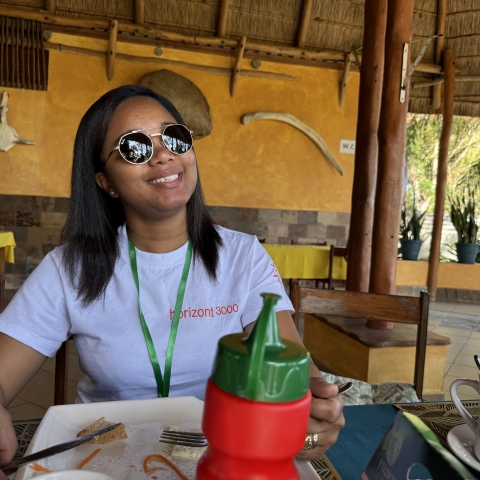
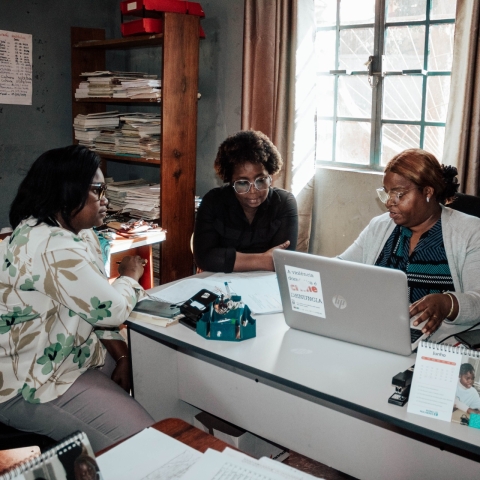
The AGM of horizont3000 Mozambique is a key platform for partners and staff members to exchange ideas, set priorities, and strengthen collaboration.
The first day of the Annual General Meeting (AGM) of horizont3000 Mozambique was held in the province of Manica, district of Chimoio and brought together 52 participants, including government representatives, development partners and civil society organizations. The opening session featured the National Volunteer Council (CNV) and the Provincial Volunteer Council (PVC) of Manica, which outlined Mozambique’s volunteer accreditation process and highlighted opportunities for collaboration with horizont3000, reinforcing the relevance of technical volunteering within the national context.
Throughout the day, ESMABAMA, AZADA VERDE, JOSSOAL and LEMUSICA shared updates on their projects and the progress achieved in their communities. A common message emerged from all presentations: the tangible impact of horizont3000’s Advisory Programme, which continues to play a central role in strengthening partner institutions.
Organizations highlighted progress in several key areas:
There was a strong sense of recognition for the advisors, who are viewed as essential contributors to the sustainable growth of partner organizations. It also became clear that the need for technical support remains significant in Mozambique, acknowledged not only by partners but also by the government, which sees advisory as an important component of institutional development and the country’s ongoing progress.
The day concluded on a positive and motivating note, strengthening the shared commitment to continue supporting partner organizations and improving the quality of community-based interventions across the country.
Day 2 strengthened participants’ understanding of how gender inequalities shape climate impacts.
Discussions explored:
Hands-on exercises demonstrated how to integrate gender, climate resilience, and safeguarding using SMART indicators.
Days 3 and 4 focused on organizational strengthening–strategic planning, safeguarding, finance, and knowledge management–while aligning partners with the 2027–2030 program cycle.
Updates on global programming and h3 Gender Equality and Mainstreaming – Phase 2 highlighted expectations for transformative change across agency, power relations, and institutions.
Day 4 introduced the Gender Self–Assessment for h3 Mozambique, enabling the team to start thinking about identify gaps, set priorities, and begin a cycle of continuous improvement.
Sessions on advisor' mental health and role clarity emphasized collaboration, emotional support, and shared responsibility.
The AGM closed with reflections on surprises, feelings, and lessons learned–reinforcing commitment to stronger, gender inclusive, and climate-sensitive work.
The AGM reaffirmed a collective mission: transforming knowledge into meaningful action for gender equality, climate justice, and resilient communities.