01.10.2026
Transforming Gender Norms through the Male Role Model Approach
Problem & Solution
In Sukuma communities in Songwe, patriarchal norms limited women’s participation in household and community decisions, ownership of land and other assets, and control over agricultural income. Women carried most unpaid care work while having less access to agricultural knowledge and resources. These inequalities weakened food security, nutrition, livelihoods and women’s public participation, and contributed to domestic conflict and gender-based violence.
ADP Mbozi responded by working through respected male role models and traditional leaders who could demonstrate positive masculinity, shared responsibilities and non-violent, inclusive decision-making. Community dialogue and locally anchored accountability made gender equality practical and culturally credible rather than an externally imposed message.
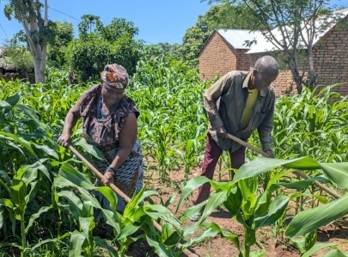
The Experience
- ADP Mbozi began with a participatory gender analysis involving community members, traditional and religious leaders, officials and service providers. It examined power, labour, asset ownership and decisions and identified norms sustaining women’s exclusion.
- Community meetings discussed the findings and selected 26 respected men as male role models who practised shared decisions, non-violence and support for their partners.
- Gender experts and police gender desk officers, conducted structured role model training on gender equality, positive masculinity, GBV prevention, human rights, nutrition, and climate-smart agriculture.
- They facilitated community and peer dialogues on women’s land rights, household labour, joint budgeting and farming decisions. Separate spaces allowed men to examine resistance and women to discuss barriers before joint sessions built consensus.
- Local authorities, traditional leaders and support organisations reinforced the process through dispute mediation, land-rights advocacy and referral pathways for violence cases.
- Staff, leaders, role models and women reviewed changes through monitoring and feedback, using findings to adapt the approach.
Challenges
- Rooted norms treated men’s control over land, income and decisions as culturally legitimate, so greater equality could be perceived as a loss of male authority.
- Women’s limited access to land, credit, farming knowledge and market information meant that increased participation did not automatically translate into greater economic power.
- Sustaining behaviour change beyond the project required ongoing support and accountability for male role models, traditional leaders and referral structures.
Impact
- More joint household budgeting, sharing of care and domestic work, farming decisions and transparent management of food and income.
- Fewer reported domestic conflicts and stronger use of protection referral pathways.
- Increased participation of women in producer groups, public forums and local leadership.
- Male role models and traditional leaders publicly challenging gender norms and the idea that gender equality undermines men’s authority and strengthened responses to land disputes and violence.
Lessons Learned
- Let communities (including resistant men) select role models based on demonstrated behaviour, not status alone.
- Resistant men require trusted peers, leaders, and non-confrontational dialogue on the benefits of gender equality, rather than messages delivered only by project staff.
- Use separate spaces for women and men before joint dialogue to reveal barriers without intimidation.
- Prepare referral pathways before discussing violence, as disclosure may create immediate protection needs.
- Link dialogue to land-rights support, referral services and local authorities so change has practical backing.

