06.10.2026
Strengthening Ward Tribunals as Gender-Responsive Institutions
Problem & Solution
Ward Tribunals are the most accessible justice institutions for many communities, yet members often take office without formal preparation in land law, women’s land rights, gender equality, mediation or ethical decision-making. Their voluntary, unpaid status further affects motivation and consistency. These gaps allowed stereotypes and unequal power relations to influence some land and family dispute decisions, limiting women’s access to fair remedies.
To address this, the Human Life Defence Department of Rulenge Ngara Diocese (HLDD) combined practical capacity-building for tribunal members with mentoring, peer exchange and community dialogue involving women, men and boys. The core solution was to strengthen both the tribunals’ legal and gender-responsive practice and the community support required for fairer decisions.
The Experience
- The project consulted tribunal members, local authorities and community members to identify gaps in legal knowledge, confidence and gender-responsive dispute resolution. Women’s experiences connected the intervention to barriers in land cases.
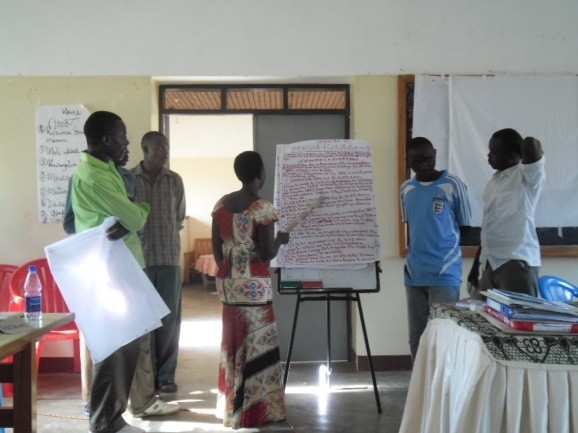
- It designed practical training on land and family laws, women’s land rights, gender equality, mediation, ethics and human rights. Case studies, role plays, group discussions and local disputes linked formal rules with participants’ mediation experience.
- Women and men serving on tribunals attended training, while community dialogues engaged men and boys as allies in challenging discriminatory norms and supporting women’s land rights. Local authorities assisted with mobilisation and coordination.
- Mentoring, follow-up visits and experience-sharing meetings helped members discuss difficult cases, reinforce learning and apply fairer approaches.
- Stakeholders reflected on changes in knowledge, confidence and practice. Feedback confirmed the value of continued support, while unpaid service and limited institutional backing remained unresolved constraints.
Challenges
- Tribunal members began their roles without systematic legal or gender training, contributing to inconsistent case handling.
- Unpaid voluntary service weakened motivation and made sustained participation difficult.
- Limited government support and recognition constrained continuity beyond project-led activities.
- Discriminatory gender norms could influence land and family disputes and required work beyond the tribunals themselves.
Impact
- Stronger knowledge and confidence among tribunal members in applying land law and gender-responsive dispute resolution.
- Fairer and more inclusive attention to women’s claims, alongside improved awareness of their land rights and access to local justice.
- Greater understanding among participating men and boys of their role in supporting women’s land rights.
- Increased community trust in Ward Tribunals and stronger organisational capacity to support local justice institutions.
Lessons Learned
- Assess members’ knowledge and case-handling difficulties before designing training.
- Combine legal content with gender analysis, using local cases, role plays and peer discussion.
- Plan mentoring, refresher sessions and application monitoring from the outset; one training is insufficient.
- Engage local authorities early to build ownership and address recognition and support for unpaid members.
- Involve men alongside women, since tribunal practice also depends on community norms.
