Date
08.10.2026
08.10.2026
Integrating Gender Education and Climate Action in Vocational Training
Problem & Solution
Young people in Beira and Dondo faced entrenched gender stereotypes that restricted occupational choices and self-expression. At the same time, environmental degradation, limited climate awareness and exposure to climate-related hazards threatened local livelihoods. Vocational education did not consistently provide opportunities to examine these interconnected issues or translate learning into community action.
Young Africa responded by integrating gender equality and environmental sustainability into its Life Sciences curriculum. Participatory classroom dialogue was combined with practical environmental activities, enabling trainees to examine discriminatory attitudes while taking responsibility for their local environment.
The Experience
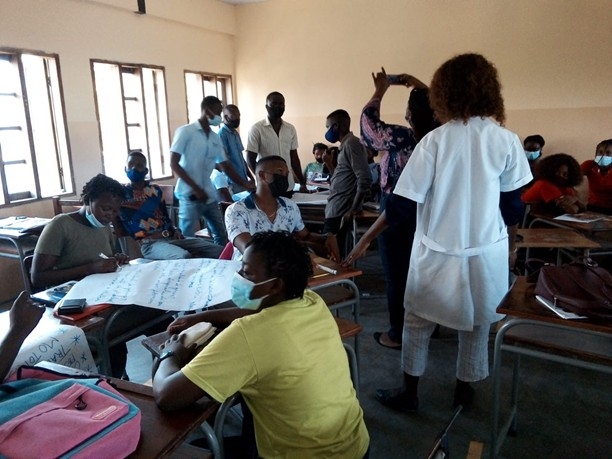
- Gender equality and environmental sustainability were systematically integrated into Life Sciences classes across the vocational courses. Using participatory dialogue and experiential learning, facilitators created spaces where trainees could discuss personal experiences, question gender stereotypes and discriminatory attitudes, and connect these reflections with their everyday lives and occupational choices.
- Classroom learning was translated into practical community action through environmental activities planned jointly by staff, trainees and local authorities. Together, they identified environmentally vulnerable areas, selected native and resilient tree species based on local knowledge, and shared responsibility for activities such as tree planting and waste collection.
- Reflection circles were held after the learning cycles to collect feedback and monitor perceived changes in attitudes. The organisation used the lessons from these activities to further integrate the approach into its curriculum and to plan continued trainer development and post-planting care.
Challenges
- Deeply rooted gender stereotypes limiting occupational choices and open self-expression.
- Environmental degradation combined with insufficient awareness of practical climate action.
- Need to maintain safe discussions when addressing personal experiences and discriminatory attitudes.
- Long-term care of planted trees requiring clear responsibilities and reliable local resources.
Impact
- Broader occupational choices and reduced acceptance of restrictive gender stereotypes.
- Improvements in respectful and equal interpersonal relationships.
- Stronger environmental awareness, practical green skills and community leadership.
- Adoption of waste management, tree care and other environmental practices.
- Gender and climate topics embedded more firmly in the curriculum.
Lessons Learned
- Use an existing curriculum subject to institutionalise gender and climate learning rather than relying on isolated events.
- Prepare practical activities through facilitated reflection so that action is connected to attitudes and behaviour.
- Establish clear dialogue rules and facilitation methods before discussing sensitive gender experiences.
- Assign post-activity maintenance responsibilities before planting begins.
- Extend gender dialogue to families to address norms reinforced outside the training centre.