30.09.2025
Reforming unjust land policy through sustained, evidence-based advocacy
problem & solution
Tanzania’s 1995 National Land Policy claimed to allow women to own land, yet it simultaneously upheld customs, which were codified in the Customary Law Order of 1963. These were characterized by patriarchal practices and male-dominated governance structures: village land bodies rarely included women and inheritance undermined women’s land rights and voice. Despite progressive laws on paper, contradictions prevailed, and structural barriers remained entrenched. The government’s 2016 decision to review the policy created an opportunity to align land governance with equality commitments.
The solution was a sustained, evidence-based advocacy campaign that bridged grassroots realities with national policymaking, ensuring the revised policy enshrined women’s equal land rights and condemned discriminatory practices.
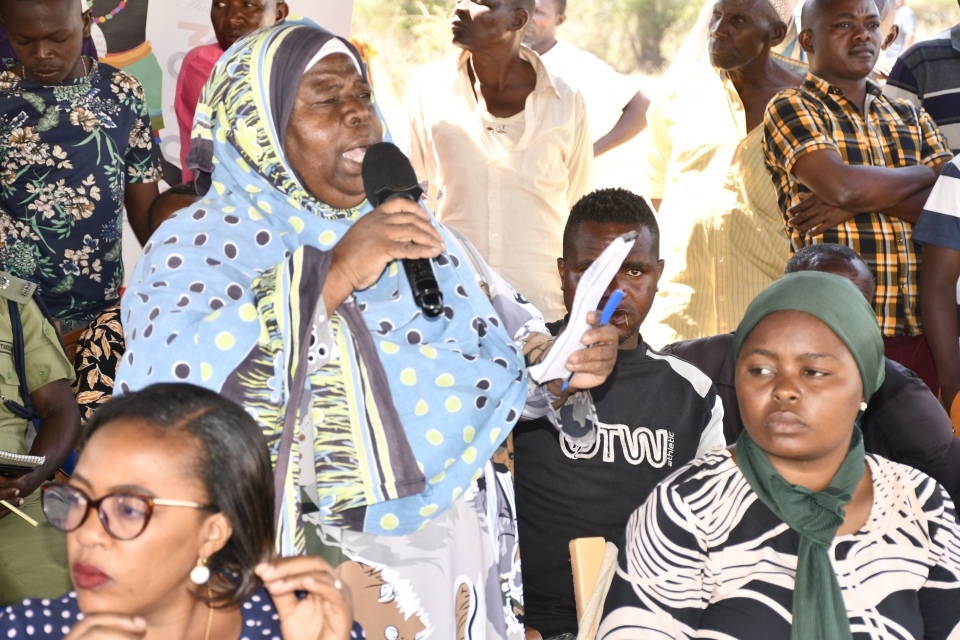
Photo: Institute member Bi Subira discusses women’s land rights reforms and the importance of inclusive governance.
the experience
- Coalition Building & Evidence Gathering: HAKIARDHI initiated strategy sessions in 2016 and partnered with CSOs to unify advocacy goals. Grassroots consultations documented women’s land rights violations and informed policy recommendations.
- Amplifying Voices in Policy Review: Organized inclusive forums and submitted evidence-based proposals to the Ministry of Lands. Ensured rural women and traditional leaders participated in national dialogues.
- Capacity Building & Local Structures: Trained Land Rights Monitors and Gender Champions to report cases and advocate locally. Strengthened village councils and dispute resolution bodies to prepare for policy implementation.
- Sustained Policy Dialogue & Media Engagement: Maintained multi-year engagement with ministries and parliament, complemented by radio, TV, and community debates to shift public opinion.
- In 2023, the revised National Land Policy was approved by the government, a landmark moment for the campaign. Workshops and high-level dialogues translated reforms into practice. Local taskforces and community awareness campaigns ensured women claim their new rights.
Challenges
- Overcoming patriarchal practices and resistance of local leaders required continuous dialogue and inclusion of sceptics in discussions.
- Navigating a slow, multi-year policy review demanded sustained advocacy and resource planning.
- Expensive land rights monitoring highlighted the need for cost-effective tools like toll-free lines, that did not require significant travel and staff time.
Impact
- The revised national policy created a real and sustainable legal foundation for gender justice.
- Village land councils now include women, improving fairness in dispute resolution and governance.
- Community attitudes shifted toward acceptance of women’s ownership, reducing harmful practices.
- Local taskforces and advocacy groups institutionalised reforms, ensuring continuity beyond the project.
Lessons Learned
- Influencing policy requires long-term, multi-level engagement: expect slow progress and plan resources accordingly.
- Ground advocacy in evidence: invest in participatory research and collect real stories to strengthen credibility.
- Media is essential to shift norms and build public pressure: engage it early.
- Coalitions amplify influence: align roles and maintain consistent messaging across partners.
- Anticipate resistance: include skeptics early, engage men as allies, address cultural concerns transparently.

